Ronald's trial and execution
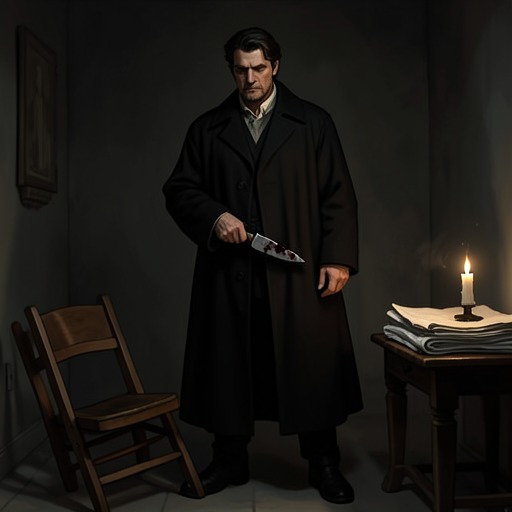
Broken Rejected MateRonald's trial and execution mark the decisive movement from personal retaliation to communal justice. Ronald Lowell is not killed in the immediate struggle; instead, his defeat, public guilt, confession, and formal sentencing place responsibility for his fate in the hands of the pack and its council. The event closes the political and moral reckoning surrounding his rule while leaving grief, family loyalty, and the cost of punishment unresolved.
From Defeat to Judgment
Ronald's legal punishment follows a confrontation in which Alan Lowell proves that he is not defenseless. Alan shifts back to human form after overpowering Ronald and orders him to leave, deliberately sparing his life. That mercy establishes an important distinction between defeating an enemy and becoming a killer. Alan's decision is guided by the principle that “A good leader knows when to show mercy,” a lesson attributed to his father, and it creates the conditions for Ronald to face judgment rather than immediate execution at Alan's hands.
The confrontation also exposes the political danger of Ronald's conduct. When Ronald is challenged over the killing of Alan's parents, he offers no meaningful denial. His silence and growl make his guilt apparent to those present, and the crowd begins to feel uncomfortable and uncertain. Whatever desire some members have for Sierra's power, killing an alpha is recognized as an unforgivable offense. The scene therefore weakens Ronald's authority before the formal trial begins: his status can no longer conceal the crimes that made his rule possible.
The Council and the Confession
After Andrew Lowell's death and the aftermath of the conflict, Ronald's high standing within the pack requires an unusually authoritative tribunal. A council made up of some of the strongest alphas in the country is formed to decide his fate. The composition of the council turns the case into more than a family dispute or a local power struggle. Ronald is judged by a wider werewolf authority, and the process gives the community a structured response to crimes that could otherwise provoke another cycle of revenge.
A witch attends the trial and draws a confession from Ronald. He admits to killing his alpha and mate, as well as committing several other crimes. The confession confirms that the charges are not merely accusations made by political enemies, and it gathers Ronald's violence into a pattern of deliberate wrongdoing. The supernatural presence at the trial does not replace justice; it compels the truth so that the council can pronounce judgment on acknowledged crimes.
Ronald unexpectedly asks for a death sentence himself once the confession is complete. His request suggests that guilt has become unbearable, although the account also frames him as a father who understands the unimaginable pain of losing a child. The request does not erase his responsibility or restore those he killed. Instead, it makes the execution both a legal punishment and the grim endpoint of a man unable, or unwilling, to continue living with what he has done.
Sentence and Absence
The council sentences Ronald to death at sunrise the following day. Alan and Sierra do not attend the execution. They remain at the Lowell family cottage, which serves as their designated safe haven until the surrounding danger settles and they can decide what to do next. Their absence is significant: Alan has already refused to turn the confrontation into a personal killing, and he likewise refuses to make Ronald's death a spectacle of revenge.
The separation also preserves the difference between judgment and triumph. Ronald's death is necessary within the council's decision, but it is not presented as a celebratory victory for Alan. The people closest to the conflict are left to recover from Andrew Lowell's death, the pack's upheaval, and the damage caused by Ronald's rule while the formal punishment proceeds without them.
Family, Grief, and Fair Punishment
The moral meaning of the sentence is tested through Alan's conversation about Andrew Lowell, whom he calls Drew. Alan asks whether Drew would have wanted his father to die. The question shows that Ronald's punishment cannot be separated from Andrew's death or from the surviving family's divided loyalties. Sierra answers that Drew would have understood that his father had to be punished for his actions, distinguishing sympathy for a dead son from forgiveness of the father's crimes.
This exchange clarifies the standard the characters ultimately adopt. Ronald may deserve death, but Alan does not have to be the one to deliver it. Sierra explicitly argues that Ronald should be punished fairly and that being werewolves does not require them to become monsters. Her position redirects Alan's anger toward a process governed by responsibility rather than impulse. The trial and execution thus complete a chain in which mercy, confession, collective judgment, and punishment coexist without turning justice into another act of uncontrolled violence.
Wider Consequences
The trial occurs alongside Sierra's recovery from yellow wolfsbane poisoning and the pack's mourning for Andrew Lowell. While Noah Collins removes the wolfsbane from Sierra's system at the pack hospital, Andrew receives a traditional werewolf burial. Tony remains silent after losing his twin, and his mother collapses from shock and stops responding to treatment. These losses prevent Ronald's execution from functioning as a clean resolution; the sentence arrives in a community still physically and emotionally damaged.
Ronald's earlier acceptance of Sierra and her subsequent growth and control also has an unintended historical consequence. Word spreads across packs that Sierra is no longer dangerous to werewolves, and Dysomnias are no longer feared in the same way. Ronald helped create the conditions for that change even as his corruption and crimes made his own downfall inevitable. His trial therefore closes his personal story while preserving an irony in the larger narrative: the man who sought power over Sierra contributed, through his initial recognition of her and the consequences that followed, to the weakening of fear surrounding her people.